
The death penalty, deterrence and deontology
250 murders stopped for every innocent executed

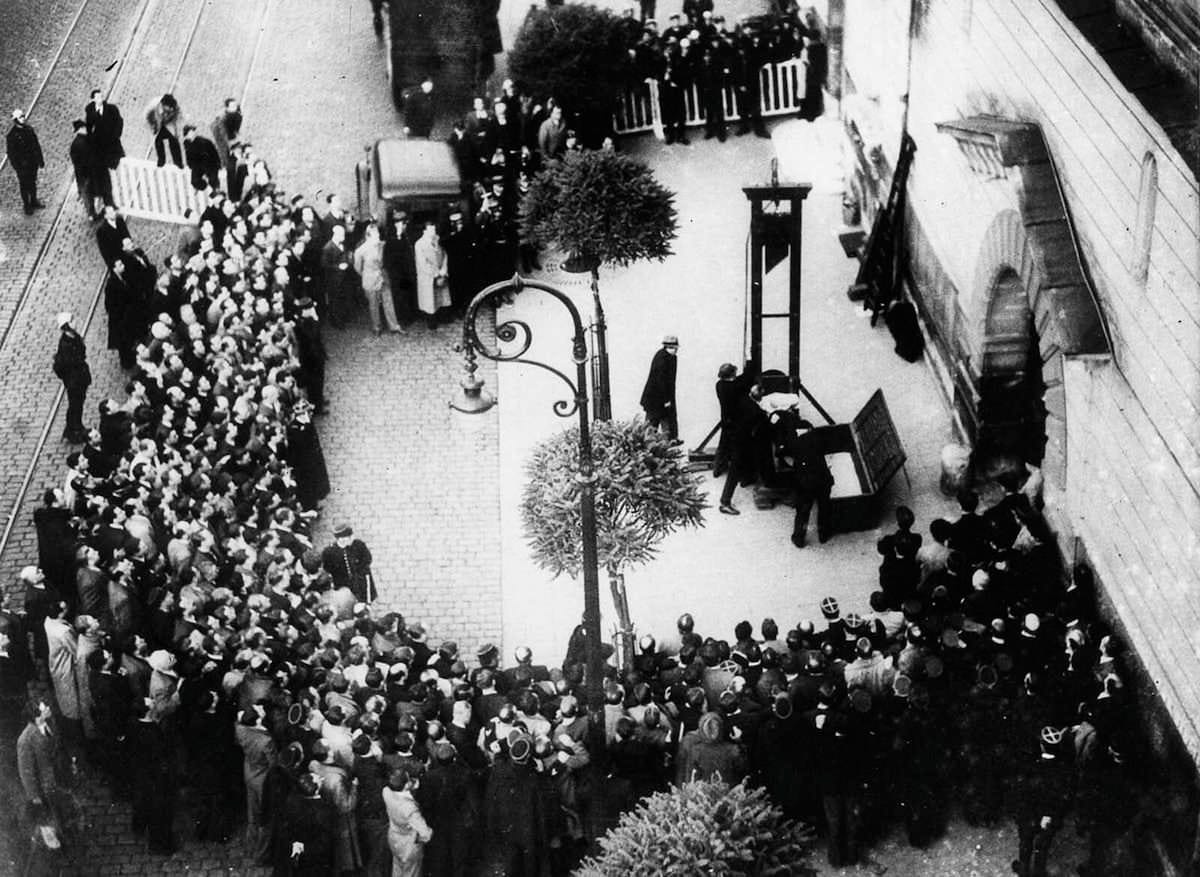
When it comes to the death penalty, a central objection to it is too many innocent people will be wrongly killed, or, anyone being wrongly killed is unacceptable. I am very sympathetic to this argument. This objection is nowhere near as decisive as its proponents think though: This is because the death penalty has the deterrent effect of reducing murder, meaning, there is potential for killings via erroneous executions being offset by the reduced number of murders. Preserving the lives of innocents then would mandate the death penalty; not suggest against it. What does the evidence say about the death penalty’s deterrence effect?
According to Steve Landsberg, the consensus among economists is each execution deters about 8 murders per year. More recent meta-analysis drawing on Paul Ehlich’s seminal research in this area confirms its deterrence effect too. Now, according to the Death Penalty Information Centre, between 1973 and today about 200 innocent people have been formally exonerated from the death penalty, while 1,630 have been executed. The National Academy of Sciences found about 4.1% of people on death row are likely to be innocent, a conservative estimate too. Applying this figure back to 1973 gives 66.83 false executions, (1,630x0.043), or, about 1.3 every year. Thus: It looks like the death penalty is saving on net about 250 innocent people every year, 251 due to its deterrence effect minus 1.3 for wrongly killing the innocent. If your concern is solely with stopping innocent people being wrongly killed, then, you should back the death penalty.[1]
Along with Murray Rothbard, I am not a consequentialist when it comes to rights, i.e., I do not believe violating one right is warranted simply in order to stop two of the same rights from being violated. As Rothbard points out in his Ethics of Liberty, this rules out a deterrence theory of punishment. If most people still maintain their objection to the death penalty, I believe it must be on the basis the death penalty exposes the potential murderer to too great a risk of being wrongly killed in the very instance of execution. Why focus on the very instance though as opposed to the overall risk of being murdered? Questions concerning the permissibility of exposing people to risk are famously difficult for deontologists to answer.
I believe there is a crucial difference between two uses of the death penalty. The first use sees it purely as a means to deter greater crime. For example, Bernard Williams’s execution of a framed innocent man to stop the angry mob from killing a greater number they wrongly think are responsible for whatever. This is obviously objectionable. The second use has it purely for retribution, but knowing it has a deterrent effect too. When you execute people under this intention the individual is not used as a mere means as the framed innocent man is in Williams’s example. Instead, there is only the risk the rights of the person will be ridden roughshod over if the jury gets the wrong result. But riding roughshod over individuals, unlike using them as mere means, does look to be something which could be open to crossings and compensation. Take this example.
Assume that cars expose pedestrians to X% of risk across a ten-mile-long road. We can assume each mile of road inflicts X%/10 risk on people. Let us assume X% risk and X%/10 for each mile is morally permissible. I take it to be fine for a road planner to increase the risk to X%/8 on one mile of the road, even if this was impermissible if the level for the whole road, if that meant over the other nine miles the risk was reduced to X%/12, taking the total risk to 86% of X% provided everyone was affected roughly equally. Our concern would appear to be with the aggregate risk of the whole road and not the particular risk of each mile. I suggest, then, introducing the death penalty is similarly okay, because, although it increases the particular risk of being wrongly executed, perhaps in and of itself to too high a level, it reduces down the chance of being wrongly killed to a greater extent.
Am I convinced of the above reasoning? Not fully. It still irks me to think a jury could condemn a man to death knowing there is a 20% chance he’s innocent simply because they know executing this man will deter a greater than 0.2 number of murders. But when we drop that 20% to below 1% then I start to think the above reasoning can kick in. Why? I don’t know. I’m pretty sure though the fact compensation post execution can’t be made is not sufficient reason in itself to oppose the death penalty as lots of leisurely pursuits such as go carting endanger the innocent with death, and, of course, justice is more important than pleasure, hence, if go carting warrants the risk of death then so does the justice of execution warrant the risk of death as well.
Under the state which does not get explicit consent to enforce justice it needs to find the moral truth to enforce the death penalty; otherwise, it wrongs the innocent. However, anarcho-capitalists need not generally find the exact moral truth on these matters because individuals would consent to private laws which would not always tract the exact limits of what justice permits. If a person consented to the death penalty in advance by signing up to a private court with its own procedures for it, then committed murder, it wouldn’t matter if the risk of his execution was ‘too high because his consent to their procedures would make it warranted. The only problem comes when a potential murderer is tried who is not a member of any protection agency or private court. Then they’d need to get it totally right.

[1] 1973 – 2025 there were 1,630 executions, or, 31 per year; multiplying 31 by 8 gives the number of murders stopped at 251 per year. For context the number of homicides in the USA in 2024 was 19,252. 4.1% of 31 is 1.3.
Wouldn’t a lot of people simply sign up to “no death penalty” protection agencies? They could guarantee that their customers would face life in prison but not kill them. Would the deterrence effect be enough of an economic incentive for them to not offer such terms?
Really interesting but surely only potential non-criminals would sign up to such an agreement? What would be the benefit to the potential non-criminal of signing up to an agreement that exposes him, put not potential criminals, to the danger of becoming the 1/250 wrongly executed? It almost sounds like there would need to be a higher degree of certainty for the conviction of non-signees, thereby lowering the number of them executed in relation to signees.